
My recent recertification as a CERT volunteer inspired me to go on and obtain a teaching certificate. With more frequent and larger disasters on the way, there can’t be too many trained CERT volunteers to assist the professional first responders.

Between the sacred and the profane.
My recent recertification as a CERT volunteer inspired me to go on and obtain a teaching certificate. With more frequent and larger disasters on the way, there can’t be too many trained CERT volunteers to assist the professional first responders.
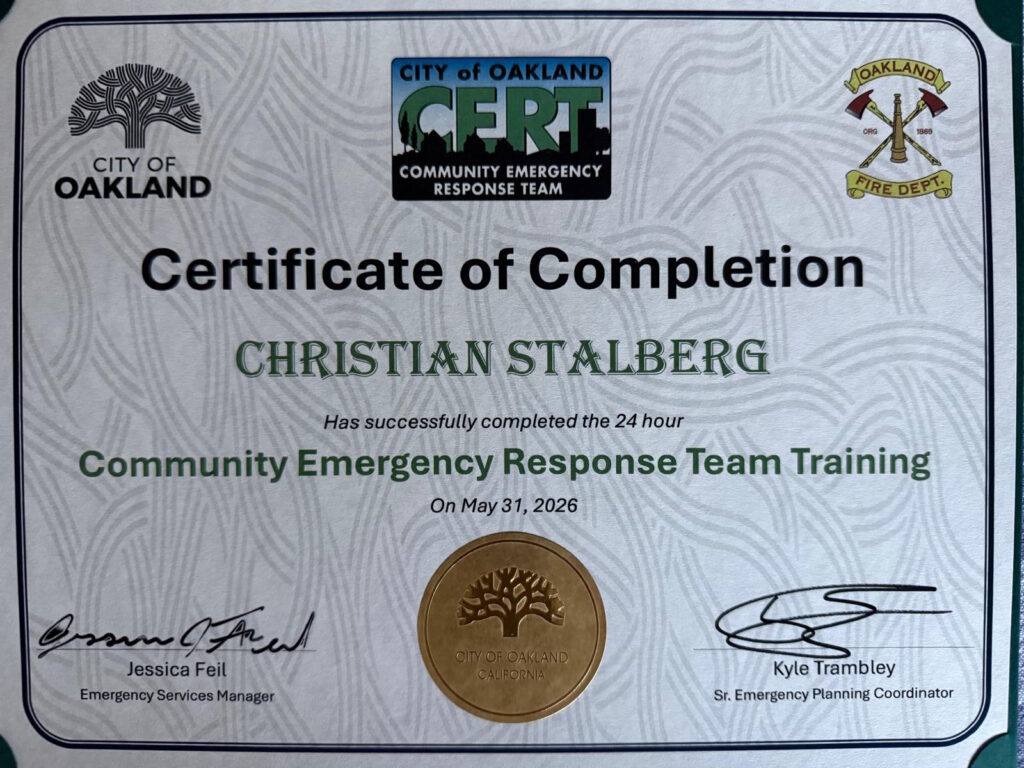 A few years ago I became a certified Community Emergency Response Team (CERT) volunteer. The certification expires after two years. I just completed re-certification. We know the Hayward Fault is going to rupture and emergency management is going to be overwhelmed. So now I am ready…again!
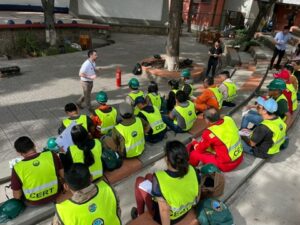
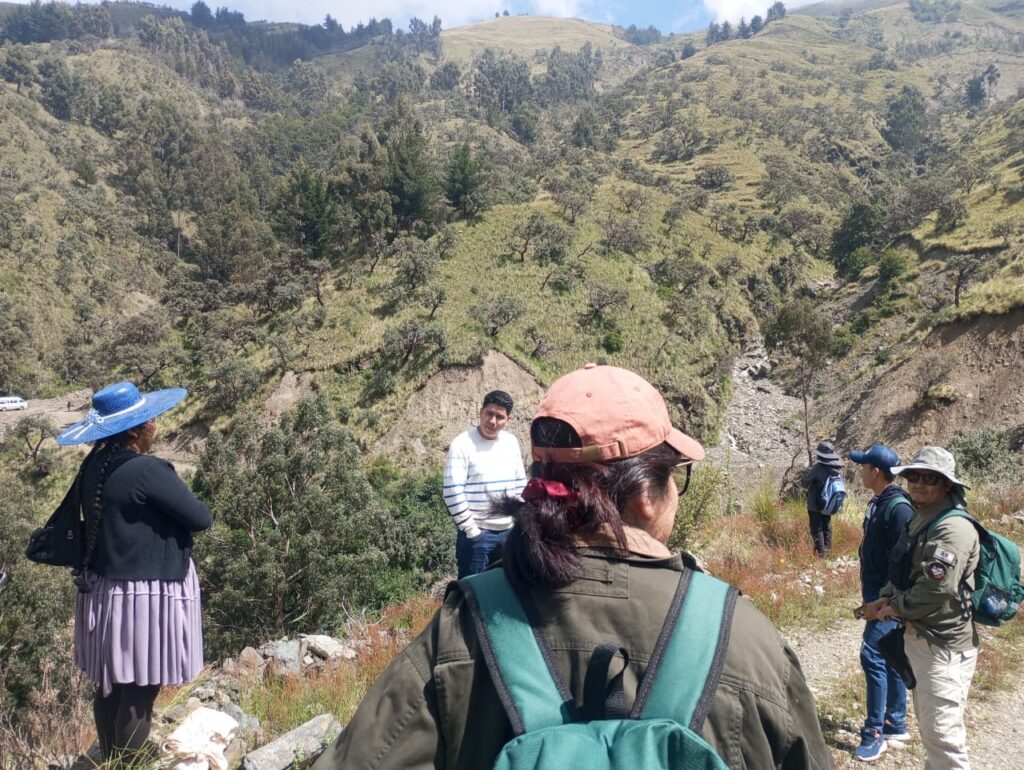
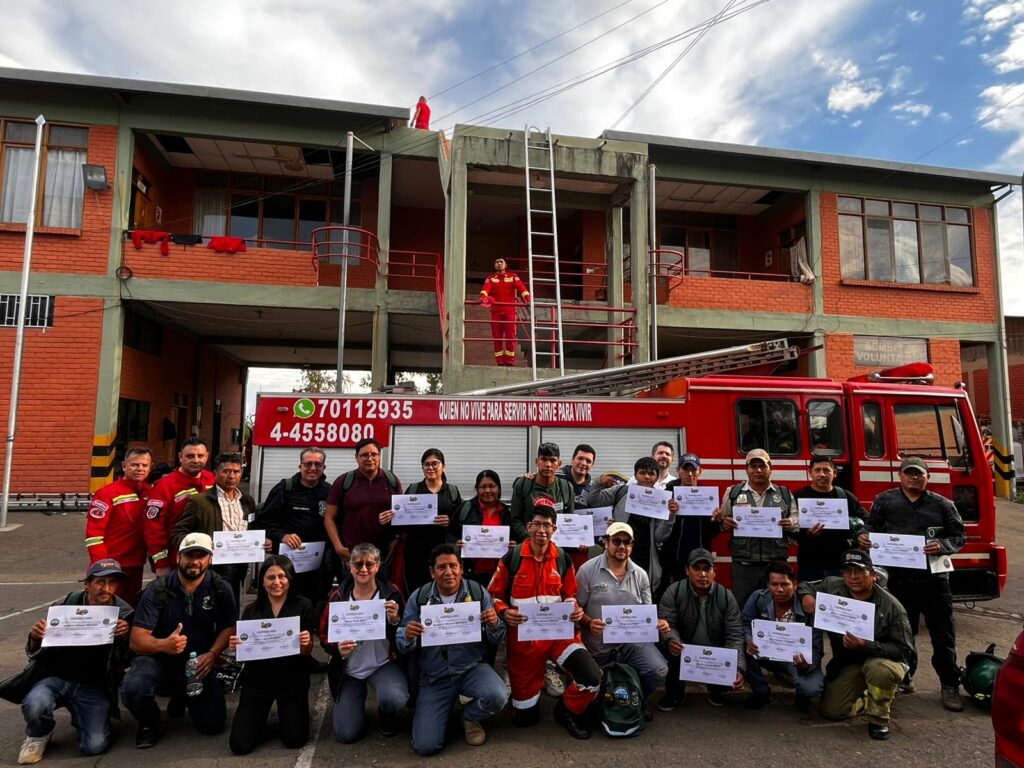
Just over a year ago I was attending a conference about the fires in Bolivia. After learning about my experience working for the State of California on wildfire matters, I was approached by Indigenous presenters at the conference and asked for help. The request resulted in the forming of an NGO called Friends of Mother Earth (Amigos de la Tierra Madre). For our first project I wrote a grant proposal to establish Community Emergency Response Teams to deal with the increasing number of disasters they’re experiencing in Bolivia. The proposal was funded by the North Carolina chapter of Partners of the Americas. We brought in two experienced CERT trainers, one from FEMA and another from CERT Latin Global headquartered in Santiago, Chile.
During the week of February 23rd we launched Bolivia’s first national Community Emergency Response Team (CERT) Train-the-Trainer program. In a single week of intensive training in Cochabamba, we certified 25 trainers representing six departments: Pando, La Paz, Beni, Chuquisaca, Cochabamba, and Santa Cruz. These trainers are now positioned to establish local CERT teams in their communities, creating a multiplier effect that extends well beyond the initial cohort. Plans include expanding basic CERT training to incorporate preparedness, recovery, mitigation, and adaptation, creating a holistic approach to hazard reduction and disaster prevention.
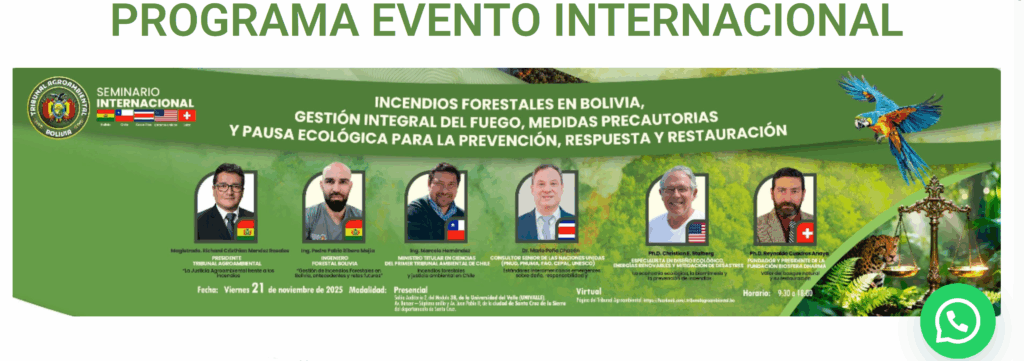
Yesterday I presented at the International Seminar on Fires hosted by the Agro-Environmental Court of Bolivia held in Santa Cruz, Bolivia. My presentation was entitled ‘The Ecological Economy, Biomímesis, and the Prevention of Fires’.
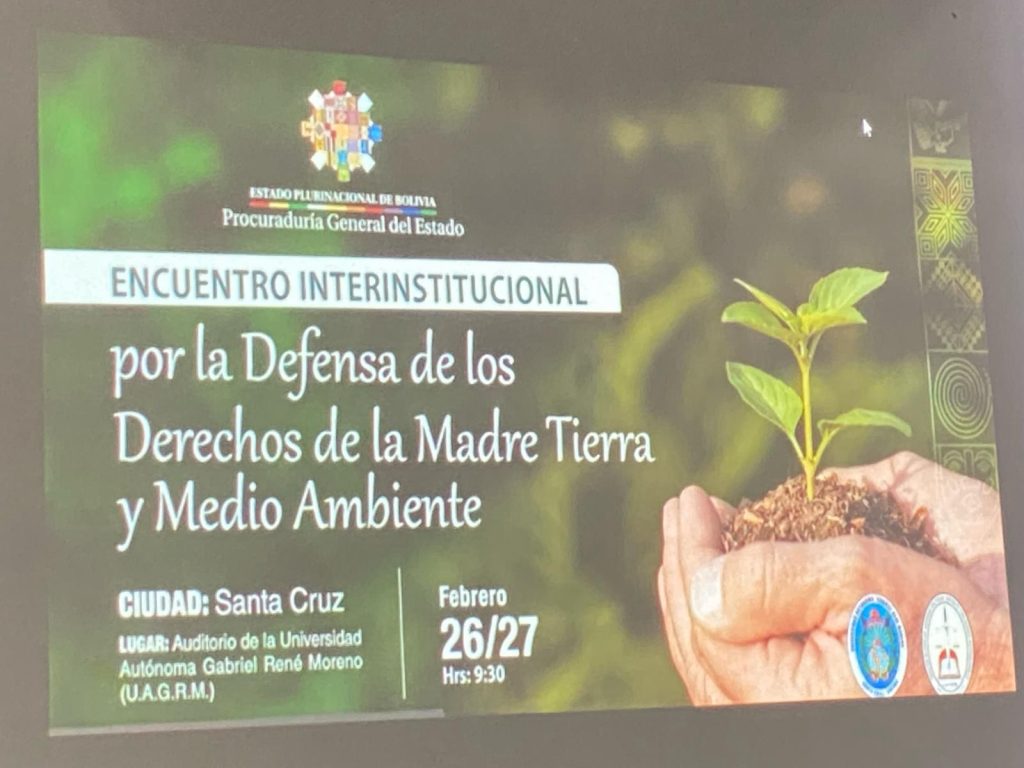
During the months of February and March I traveled across Bolivia having meetings with mostly public sector actors, as well as giving presentations. I met with Ministers, Vice Ministers, university Rectors/Vice-Rectors, a Governor, a former mayor, numerous local officials, and representatives of several NGO’s. The discussions focused on environmental problems and potential solutions. They ranged from the biggest most visible problems, such as deforestation from fire and mercury contamination from artisanal gold mining, to contamination of surface waters, destruction of aquifer recharge zones, and development encroachment into sensitive, protected areas. Also discussed was the ineffectiveness of government to protect public health and safety from hazards, including the absence of environmental jurisprudence, as well as their inadequate disaster readiness resulting in increased injuries and loss of life and property. Several initiatives are being explored to bring resources to bear on these problems.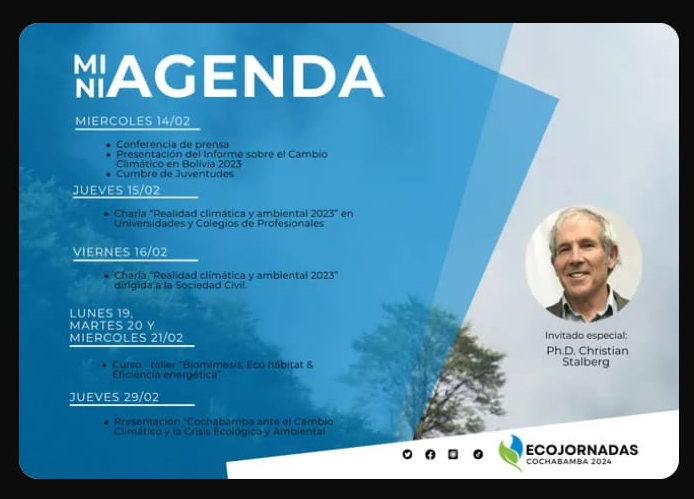

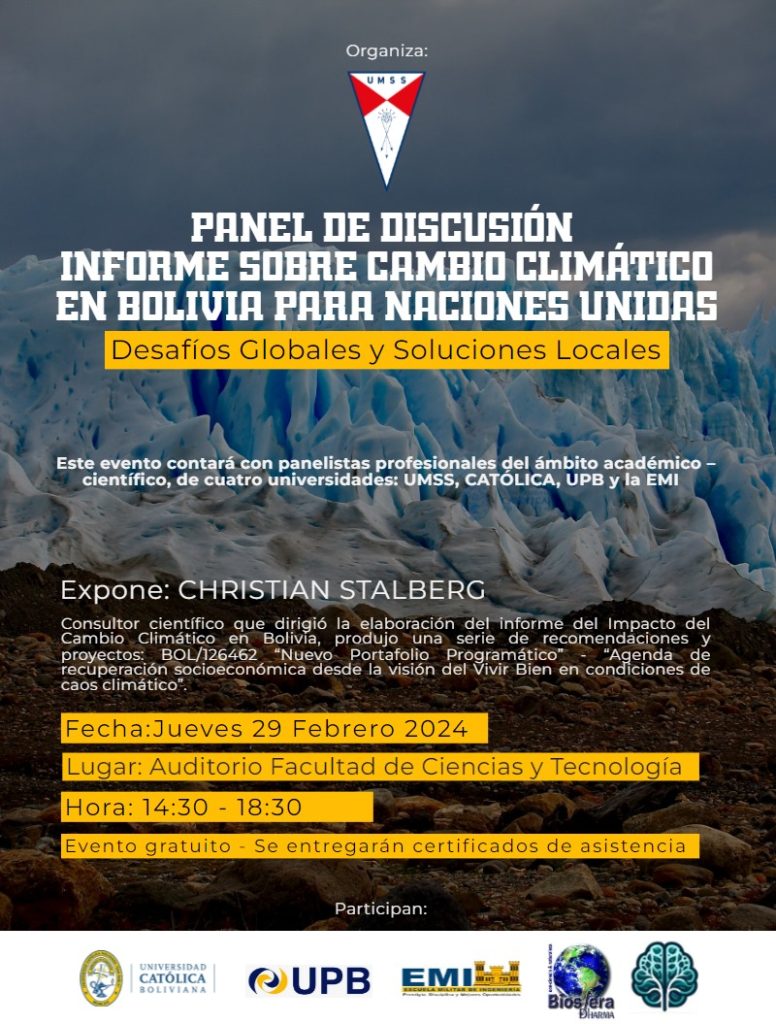
An article I penned last month has gotten quite a bit of circulation. Here is one such reprint.
Localization: Bringing about Buen Vivir to address climate fluctuations and globalization
Industrial food for profit has resulted in a highly vulnerable food production system. Now with climate chaos upon us, we must diversify our food crops. No more monocultures!
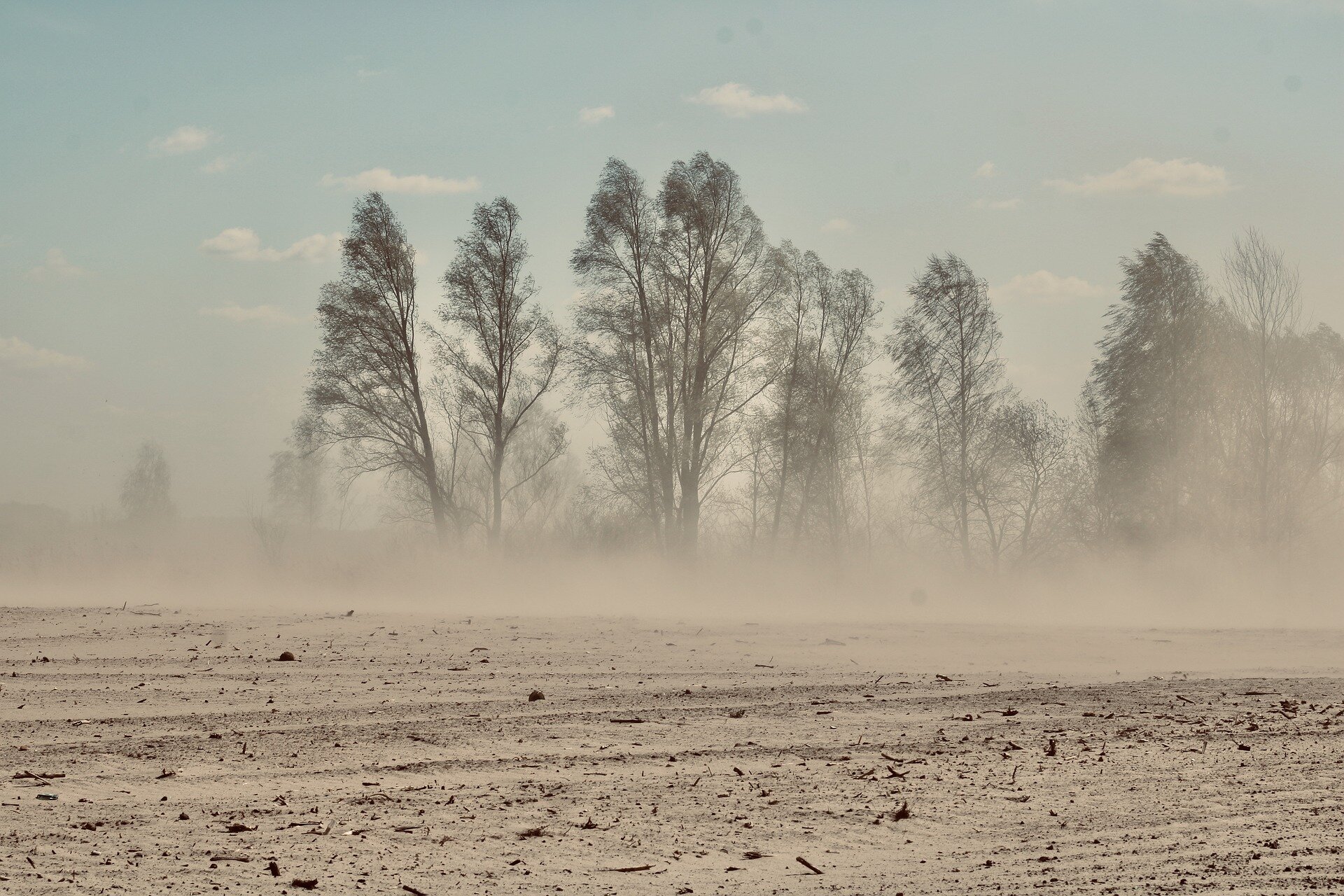 Our world has become too politicized and economized. Everyone’s an expert. Thankfully there are scientists who remain undaunted by our pathetic state of affairs and are doing the hard work of providing sound guidance as to what must be done at this time. The time has come where the people must force their governments to do what’s necessary to save earth systems that support life. That translates into disaster declarations globally and instituting emergency actions across the board as cited in the report ‘Six areas where action must focus to rescue this planet‘.
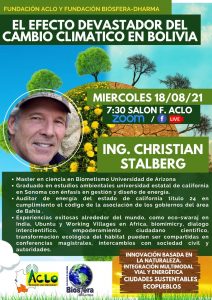
Touring Bolivia giving lectures about localization expressed as ‘ecopueblos’ as a response to climate chaos in an effort to cease migration to the cities. Working with UNDP, the private sector, government, academia and civil society groups. We all need to be on the same page in this effort! #climatechange #environment #climate #climateemergency #globalwarming #climatechaosmitigation #climatechaosadaptation #climatechaosresilience
 Stereoscope photo of J Street in Sacramento during the 1862 flood. Charles L. Weed/California State Library
In addition to wildfires and earthquakes, California also experiences floods. Sometimes they can be massive and devastating floods. A meteorological phenomenon known as ‘atmospheric rivers’ can unleash huge amounts of moisture onto the California land surface. Occurring once every one to two hundred years, the USGS refers to these events as ARkStorms. The last such event took place in 1861-62. For further information, visit ARkStorm Scenario and The Biblical Flood That Will Drown California.