Bolivia

I have a special relationship with Bolivia having been there five times over the years, courtesy of the Partners of the Americas and Fulbright programs. The situation in Bolivia today is a complicated one and it has been instructive for me to witness the mis- and disinformation generated from recent events there in recent weeks following the national election. In today’s saturating infosphere, separating fact from fiction, and truths from untruths, is no small job. This is especially difficult given the manipulative and coercive power of weaponized information, combined with the increasing  absence of critical thinking in our culture. One must remain vigilant and open minded, always seeking truth and facts so as to not find oneself inadvertently having adopted hard-line positions on either the Left or the Right. Typically, upon closer examination, you will find elements of the truth to be found on both sides and the truth, my dear, will set you free (from deception and ignorance).

Given the capitalist’s and imperialist’s dominance of mass media in the world today, I feel it is important to lift up powerful voices that are being silenced and ignored  (and in this case, also demonized) by the powers that be. It is in this spirit that I want to share this recent interview with the (now deposed) president of Bolivia Evo Morales. Listen closely with an open mind, you might learn something.

Book Review: The Hidden Life of Trees by Peter Wohlleben

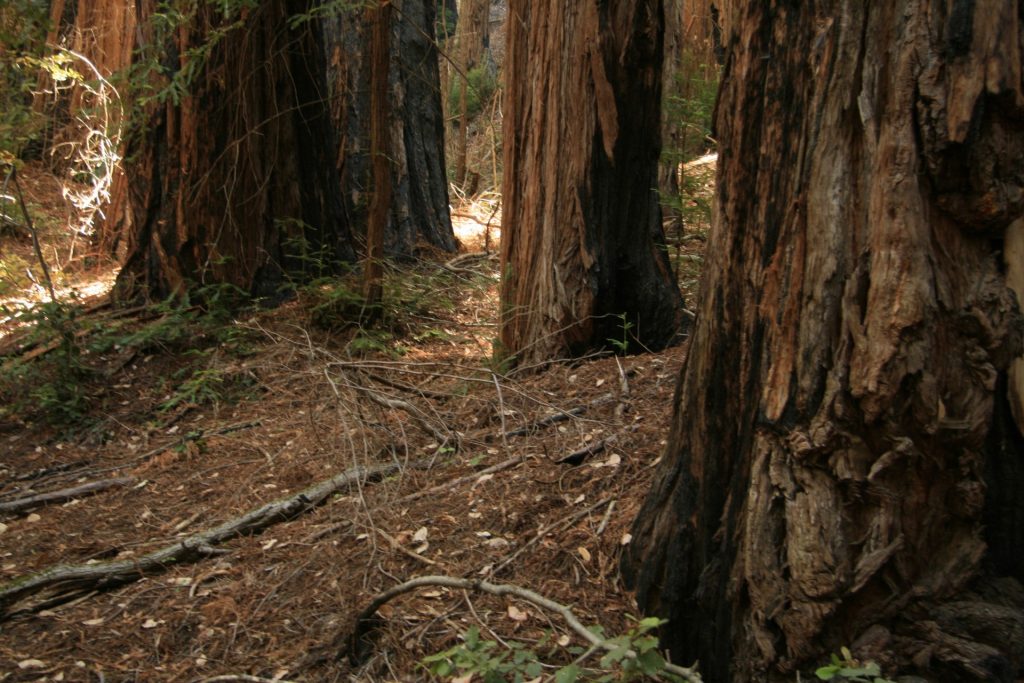
redwood trees

Are trees sentient beings? Author Peter Wohlleben believes so. He ascribes feelings such as pain and empathy, as well as sensations to trees, including hearing, seeing, smelling, touching and tasting. He goes even further however and says that they also communicate, nurture their young, and will even feed other trees that are running short on nutrients, i.e. showing care. Does Mr. Wohlleben sound crazy? Actually, not so much, according to the latest scientific findings about trees. There’s no question of him being an authority on the subject. As a forester with responsibility for managing a forest in the Eiffel mountains in Germany, he speaks from over twenty years of knowledge and experience. Wohlleben combines his intimate experience with the forest and the trees in it which he is personally responsible for, with the latest scientific knowledge. The end result is something between a fantasy novel and a briefing on the latest scientific findings about trees.

It has been discovered that sick pine trees whose cambium had died due to an aggressive fungus were being nurtured by neighboring healthy trees via their roots. The cambium pumps sugar solutions from the tree’s needles down to its roots. Prior to this discovery, the widespread belief was that without a cambium, a tree simply could not survive. Well it turns out that it can, because of the care the sick tree receives from its neighbors.

Mr. Wohlleben cites trees have the ability to see. As it turns out, trees shed and grow leaves not only according to temperature. Beeches, for example, are known to not leaf out until it is light for at least thirteen hours a day. How do they know this? Buds containing folded baby leaves on a tree branch are covered by a scale. Well, the scale is actually transparent such that the light can penetrate. So the tree ‘sees’ the light (and counts the hours?) and knows when it is time to begin growing.

The book goes on to give further instruction on the sentience of trees. When trees are really thirsty, they scream. Humans cannot hear them because the sound is in the ultrasonic range. They are also capable of learning. Mimosa leaves closed up at first when drops of water fell on them. But after a while, they stopped doing that, because they learned there was no danger.

While the book was been on the best seller list for the longest time, as you might expect, it has become a source of ire for certain critics. Ascribing human-like behaviors to trees is classic anthropomorphism, and this is a sin according to the scientific method. After all, we all know that the non-human world runs on stimulus-response. There are no cognitive intelligences among the other than human world. Or are there? We are learning that there are multiple intelligences in people. Why can’t we grant the same possibility to the other than human world? One thing for sure, I found the book to be almost revelatory, supporting my existential framework that holds nature as miraculous.

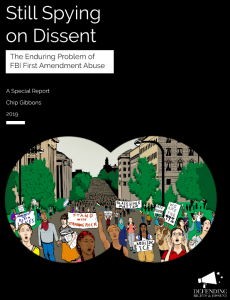
Still Spying on Dissent

still spying on dissent

“If you are reading this, you already know that the FBI has engaged in a pattern of political spying over the course of its 100 year history. And you know that the groups the FBI spies on tend to be civil rights, environmental, and peace activists. You know they treat the Muslim community as inherently suspect, without any factual basis. But most people, and certainly most lawmakers, just aren’t paying attention. So our report meticulously documents the problem, particularly over the past 10 years, and makes the case for serious reforms.”

from the publisher Defending Rights & Dissent

The FBI Has a Long History of Treating Political Dissent as Terrorism – review of report at The Intercept

Surrealistic

san francisco climate strike march

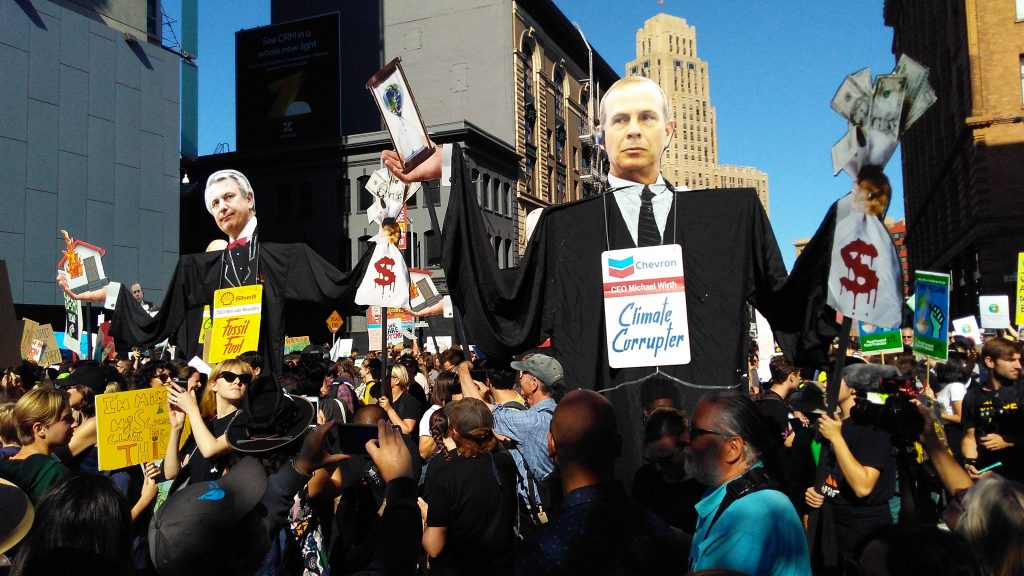
As I marched through San Francisco with at least 8,000 (and possibly as many as 40,000) other marchers on September 20th, I found myself heartened. California is known for its non-judgmental, laid-back attitudes and there would have been more people if the metro area of this size had been elsewhere. The march made three stops along their route: 1) BlackRock; 2) Pacific Gas & Electric; and, 3) Immigration and Customs Enforcement (ICE). I was carrying a small sign that said ‘Stop Killing the Earth. There is No Planet B’ along with a butterfly kite on top of a bamboo pole. Stopping at the large glass lobby of BlackRock allowed me to push my sign and the butterfly against the window enabling the people inside the lobby gawking at the protesters to plainly see my messaging instrument. I wondered: did even one person inside the lobby that Friday afternoon experience any reflection about the connection between what BlackRock does to make money and killing the earth? I’ll likely never know.

Farallones Institute 40th Reunion

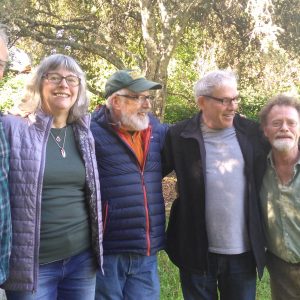
On May 9-10, 2019 I attended the 40th year reunion of the Farallones Institute seeing friends some of which I had not seen in well over thirty years. The Institute was an amazing place founded on a vision for how best to participate in the growing ecological movement of the 1970s. It’s an amazing story really, too long to tell here, but I’ll include some pics and links here so readers can get an idea.

Integral Urban House

What today is known as the Occidental Arts & Ecology Center (OAEC) in Occidental, California started out as the Farallones Institute some 40 years ago. I was fortunate to live and work at the Institute in the mid-eighties, both as the last caretaker/tour guide of their Integral Urban House on 5th street in Berkeley, California and also at what we then called ‘the rural center’ which is where OAEC now exists.

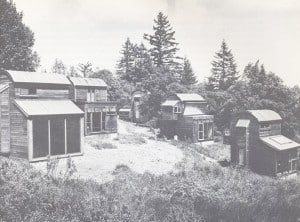
solar village at Farallones Institute

The Farallones Institute started with an idea of a few folks and for more than two decades went on to make its mark on society and the world, ranging from becoming the place where the organic vegetables for Alice Water’s Chez Panisse were first grown, to demonstrating urban-self reliance in the city, and from first using the internet to link environmental and appropriate technology organizations globally (ECONET), to training Peace Corps volunteers before their overseas assignments.

The work at the Integral Urban House became a best selling book and was for a time the appropriate technology sourcebook of its day. The house was world famous. I can vouch for this personally as I gave tours to people from all over the world who made their way there. Integral Urban House book

While working for the Farallones Institute I became head of the ECONET project which became a significant early pilot in the use of the internet, years before the invention of the web browser. Because of ECONET I had the good fortune of meeting many of the pioneers of the personal computer and internet revolution including Douglas Engelbart, Jacques Vallee, Lee Felsenstein, Stewart Brand and Tom Jennings. My work with ECONET led to a career in telecomputing which lasted many years.

The people who went through the Farallones Institute experience went on to do great work throughout the world. At the reunion a few of us discussed uniting our shared vision of an ecological world contemporary with our times and manifesting that in a meaningful way. We’ll see!